QMed
After breakfast, we visited a local Malaysian startup called QMed for one last company visit. This startup was a software company specializing in B2B software for hospitals and medical practices. Their target is larger hospitals providing software and hardware solutions to streamline hospital queue systems and provide specialized LLMs to assist doctors in diagnosing their patients’ conditions. This startup was born from the VC firm, 1337 Ventures which we visited a few days ago.
I was interested in how they went about finding larger clients as a startup, to which the presenter, Dr. Kev Lim, replied that he would go to trade shows with an idea in mind, try to sell it to the clients, and then if they were interested, develop the idea. Essentially, they would sell the software/hardware solutions to assess demand before developing them.
One particularly interesting thing I learned about QMed was how they had devised a more cost-effective way to train LLMs using Intel CPUs rather than the more expensive GPU. I had a conversation with the CEO at the end of the presentation about this since I was interested, having come from a computer science background. He showed me some of the servers they were using to train models, and we discussed how smaller generative models can be better for giving more specialised responses rather than the larger more generalised models. He gave me his business card and asked me to discuss it further with him later via email.
Presentations
After visiting QMed we returned to our hotel to give our presentations. The university had booked one of the meeting rooms in the hotel we were staying at, where the air conditioner must have been set to 10 degrees Celsius as it was freezing in there. All the presentations went well, including our presentation. To decide the order, the tour organisers created some specialised Kahoots (which is an online quiz game) with questions that related to the tour. The winning team would get to decide the order. Our team won the first two quizzes which were themed around facts discussed during the tour about Singapore and Malaysia. The third quiz was themed around people on the tour with questions such as: “Who lost their hat in the Selangor River?”, and “Who is the tallest in the group?”. I featured as the answer to the question: “Who was the celebrity who was called handsome and photographed by Chinese tourists during our walking tour in Malacca?”, which I found very amusing.
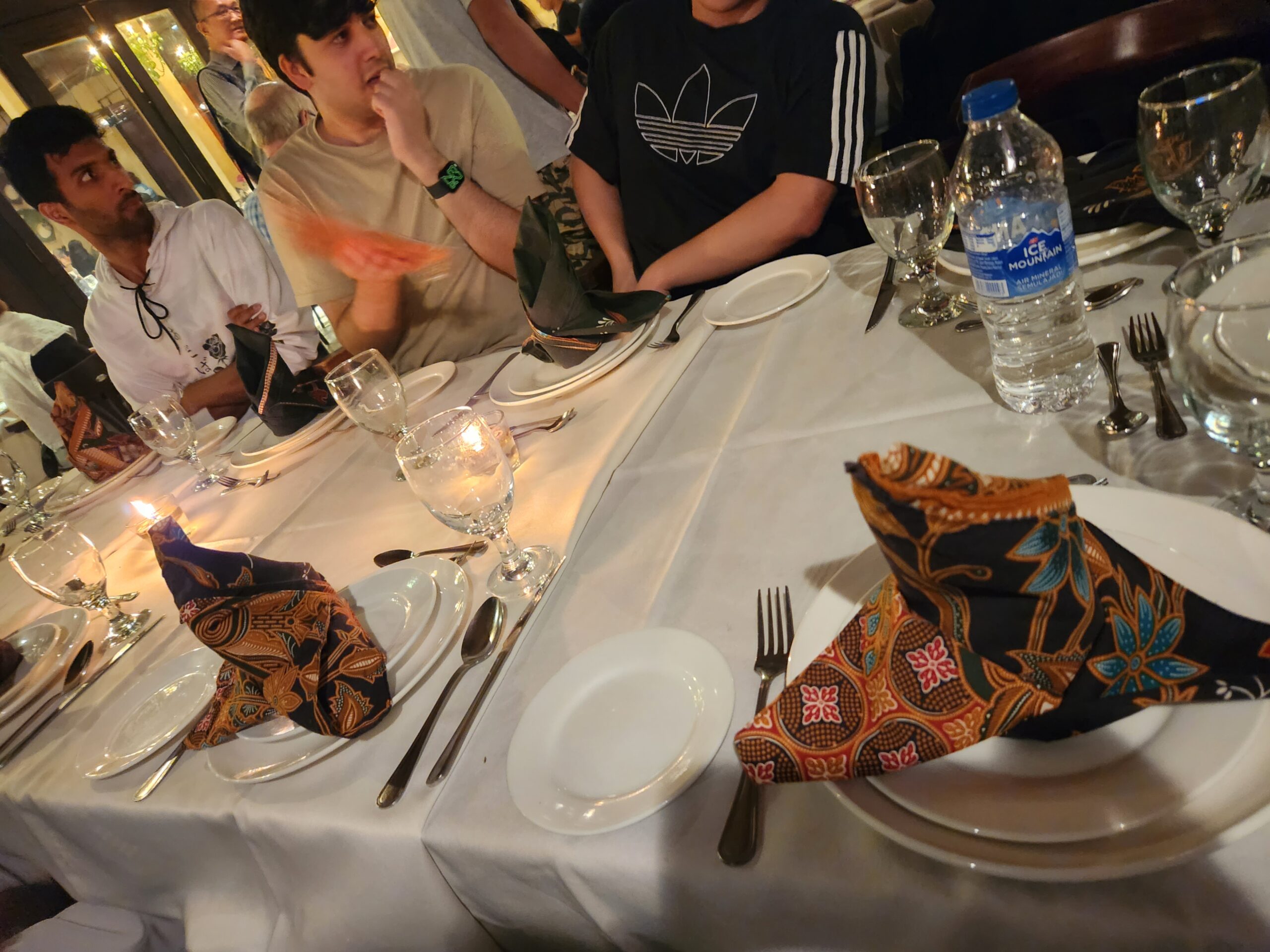
After the presentations, we had a farewell dinner together to celebrate the end of the tour. Overall, I enjoyed this study tour, and it exceeded my expectations in terms of a more educationally focused international tour. I am grateful for all those involved in making this possible that I was able to be given this opportunity and look forward to sharing more details in person when I return.